
About
A student-led place to start with robotics
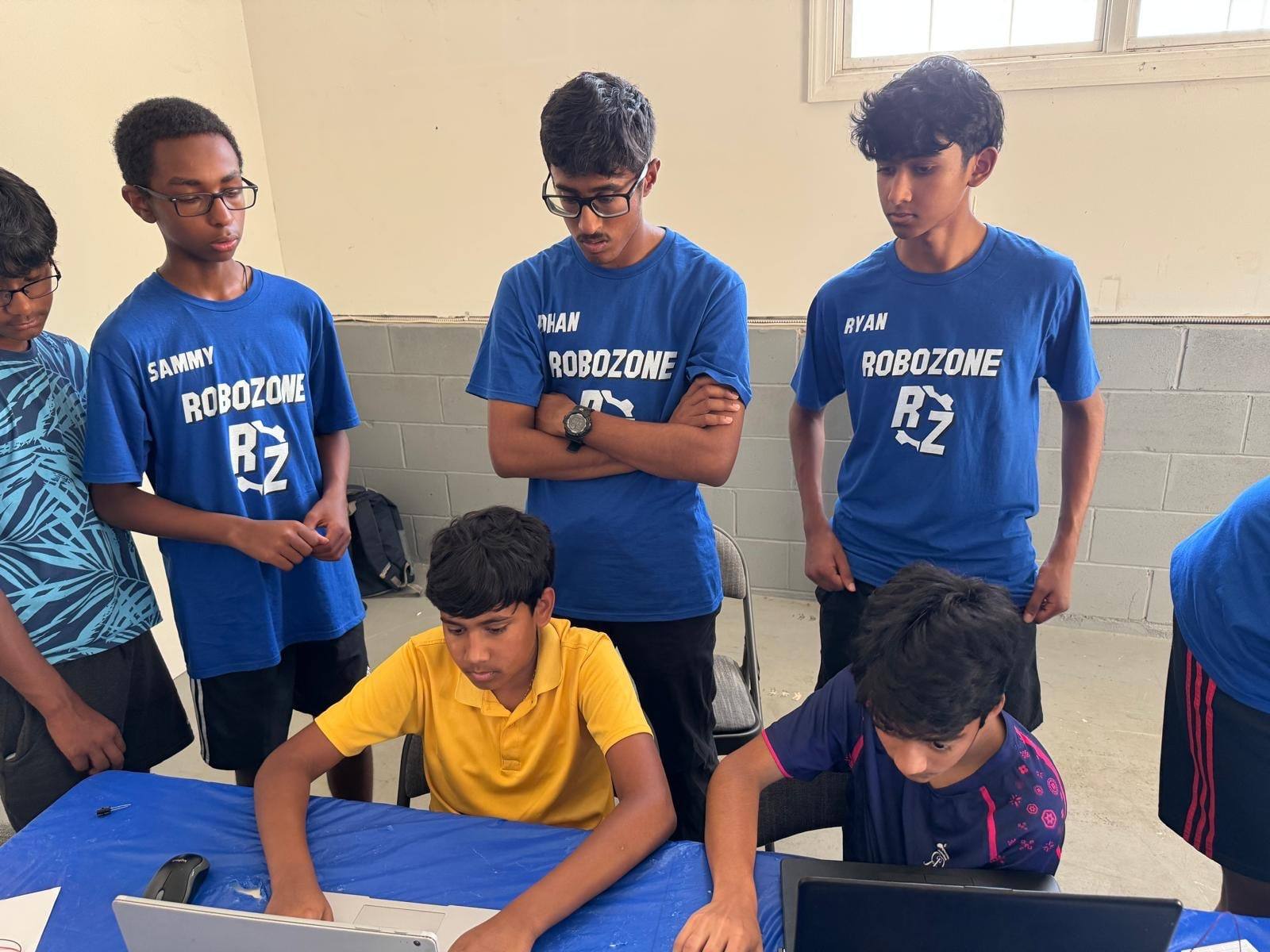
RoboZone is a robotics education initiative run by high school students. It started in South Brunswick, New Jersey in 2024.
Why we started
RoboZone's founders learned robotics, electronics, and programming mostly on their own. Without structured guidance or someone to ask, that was difficult.
They started RoboZone so younger students would have a better place to begin: a clear sequence of lessons, real parts on the table, and mentors close enough to ask when a circuit or a program doesn't work.
How we teach
Hands on, in small groups, with help nearby
- Real hardware from the start
- Students build with breadboards, electronic components, and Arduino boards, and write the code that runs them.
- One skill at a time
- Our in-person course moves from circuits to code, then to motors and CAD, and ends with a final project. See the full curriculum.
- Near-peer mentors
- Our mentors are high school students, not much older than the students they teach.
- Mistakes are expected
- Debugging a circuit or a program is part of learning how it works, so students are encouraged to ask.
So far
What RoboZone has done since 2024
These are totals from our in-person workshops in South Brunswick since RoboZone started, not the size of one session. Each in-person course runs 8 weeks.
- students taught
- 90+
- workshop hours
- 160
- mentors involved
- 15+
Where we've taught
Our very first session was held in a garage. Since then, our workshops have been held at Code Ninjas in Kendall Park. Here are photos from a few past sessions.
-
Summer 2024
Where it started
Our first session, held in a garage
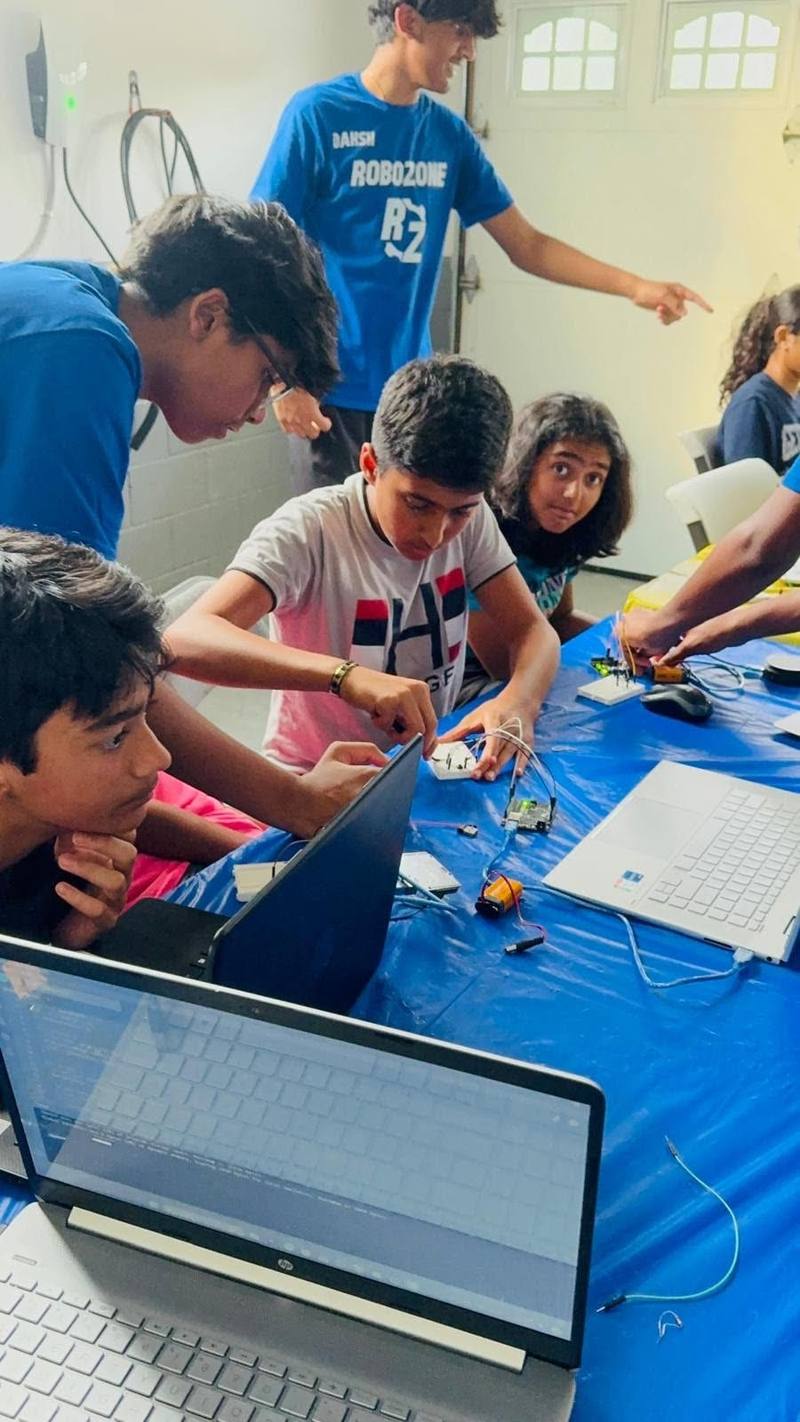
Mentors and students around one table. -
Winter 2024–25
At Code Ninjas
Code Ninjas, Kendall Park
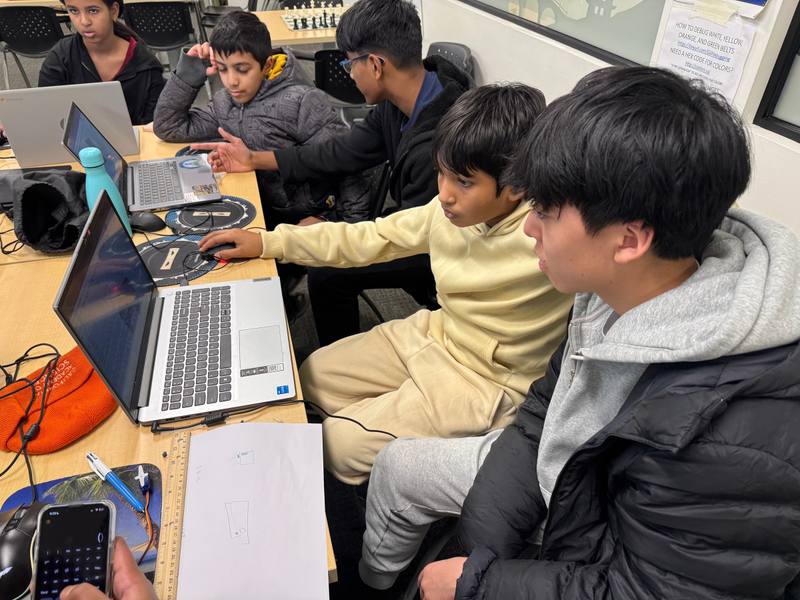
Working from a paper sketch and measurements. -
Summer 2025
At Code Ninjas
Code Ninjas, Kendall Park
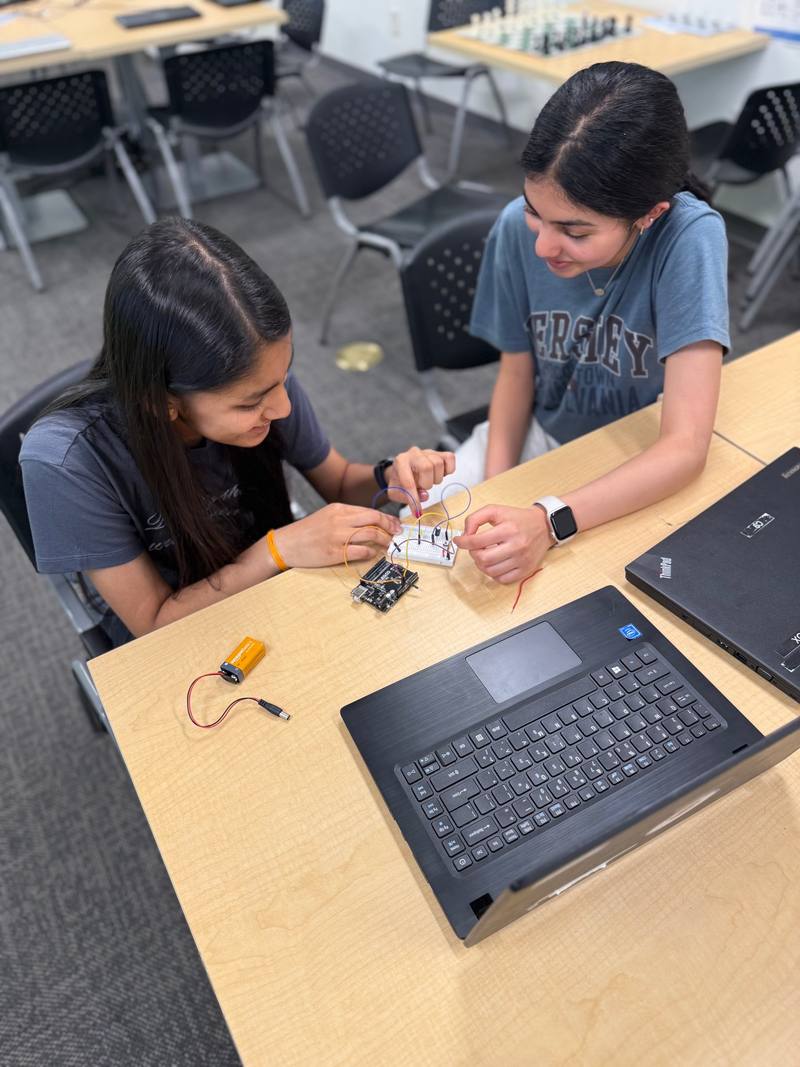
Wiring a circuit together. -
Next
Not scheduled yet
Location announced with the dates
Program updates
Now and next
Where RoboZone is headed
We'd like more students to have the kind of start our workshops give, including students far from South Brunswick. Here's what exists today and what we're exploring.
Today
Established Next session not scheduled
Our in-person course in South Brunswick is established: it's what RoboZone has taught since 2024. The next session hasn't been scheduled yet.
Program updatesBeing explored
Being explored Dates not announced
Online classes. We're planning free, 60-minute online workshops in circuit simulation and CAD. Students will build virtual circuits and create digital 3D models, with no physical circuit building or 3D printing.
Being explored No other branches yet
Local branches. Local groups in other communities that would run hands-on workshops using RoboZone's teaching approach.
Neither has launched, and no dates, locations, or new leadership roles have been set.
More about these ideasThe team
The students who started RoboZone
RoboZone's four co-founders share the role of co-president and organize its sessions.
Co-Founders & Co-Presidents
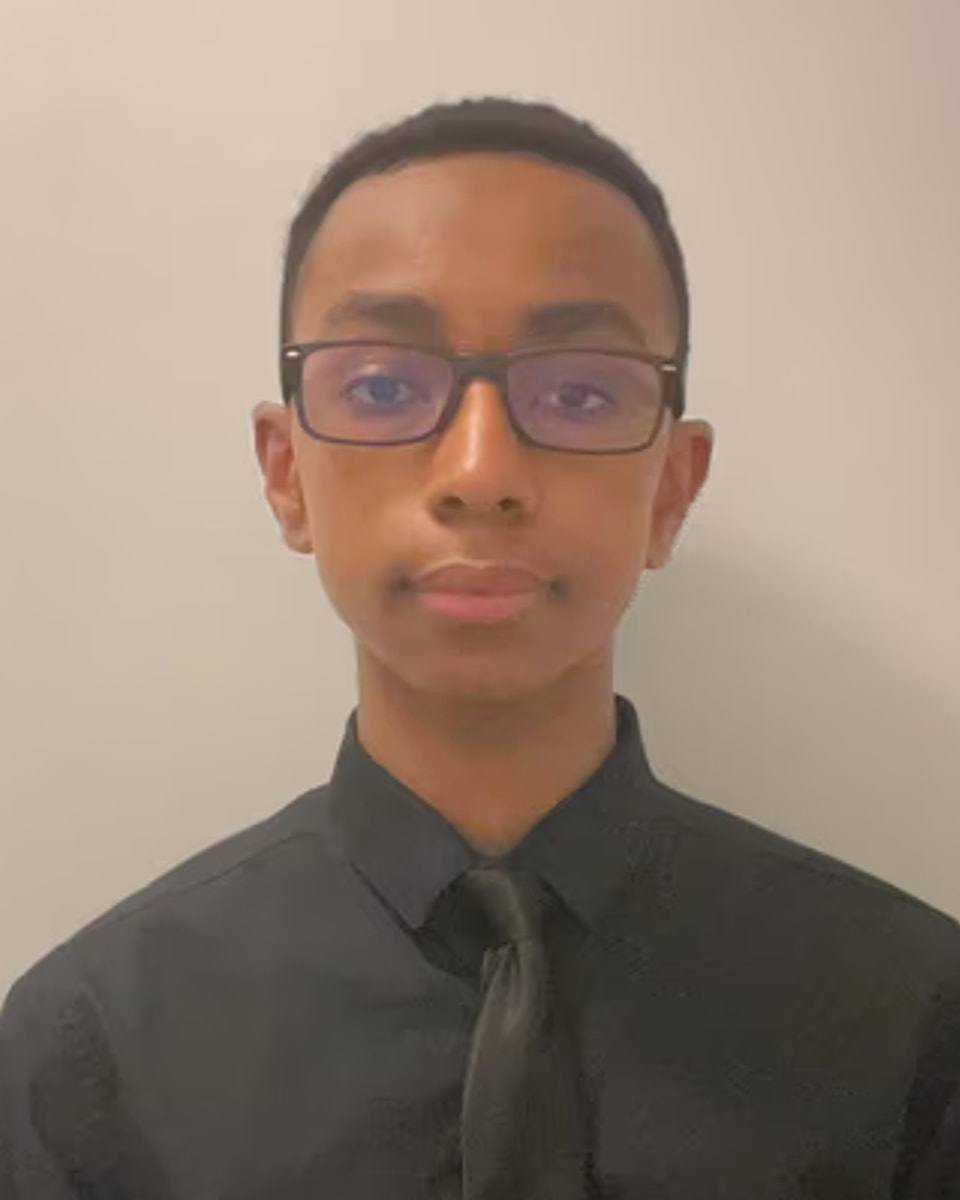
Samuel Asefa
Student at South Brunswick High School and a member of VEX Robotics team 750W. Competes in Science Olympiad and has two cats.
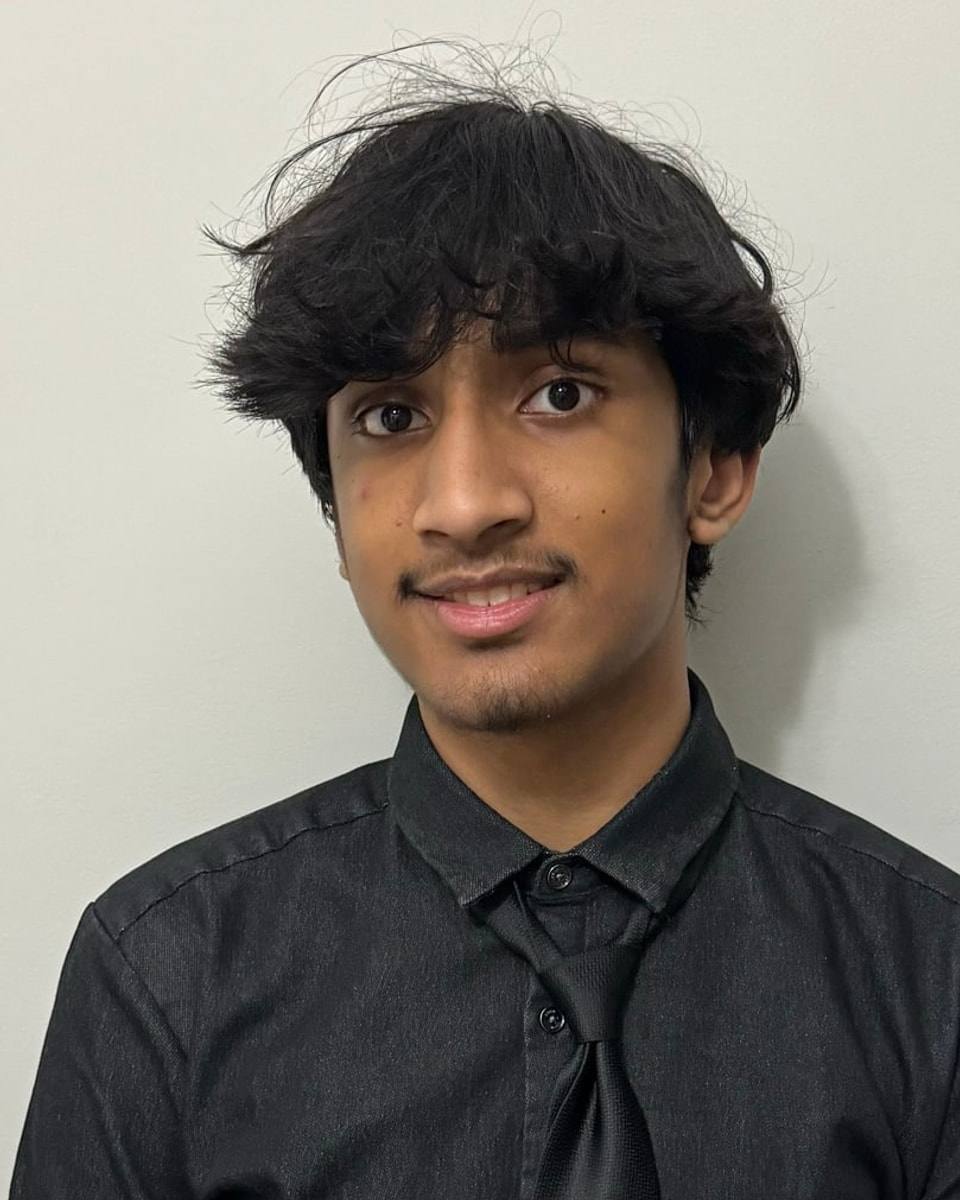
Daksh Gupta
Student at South Brunswick High School and a member of VEX Robotics team 750W. Works on computer science projects and spends time with friends, family, and his dogs.
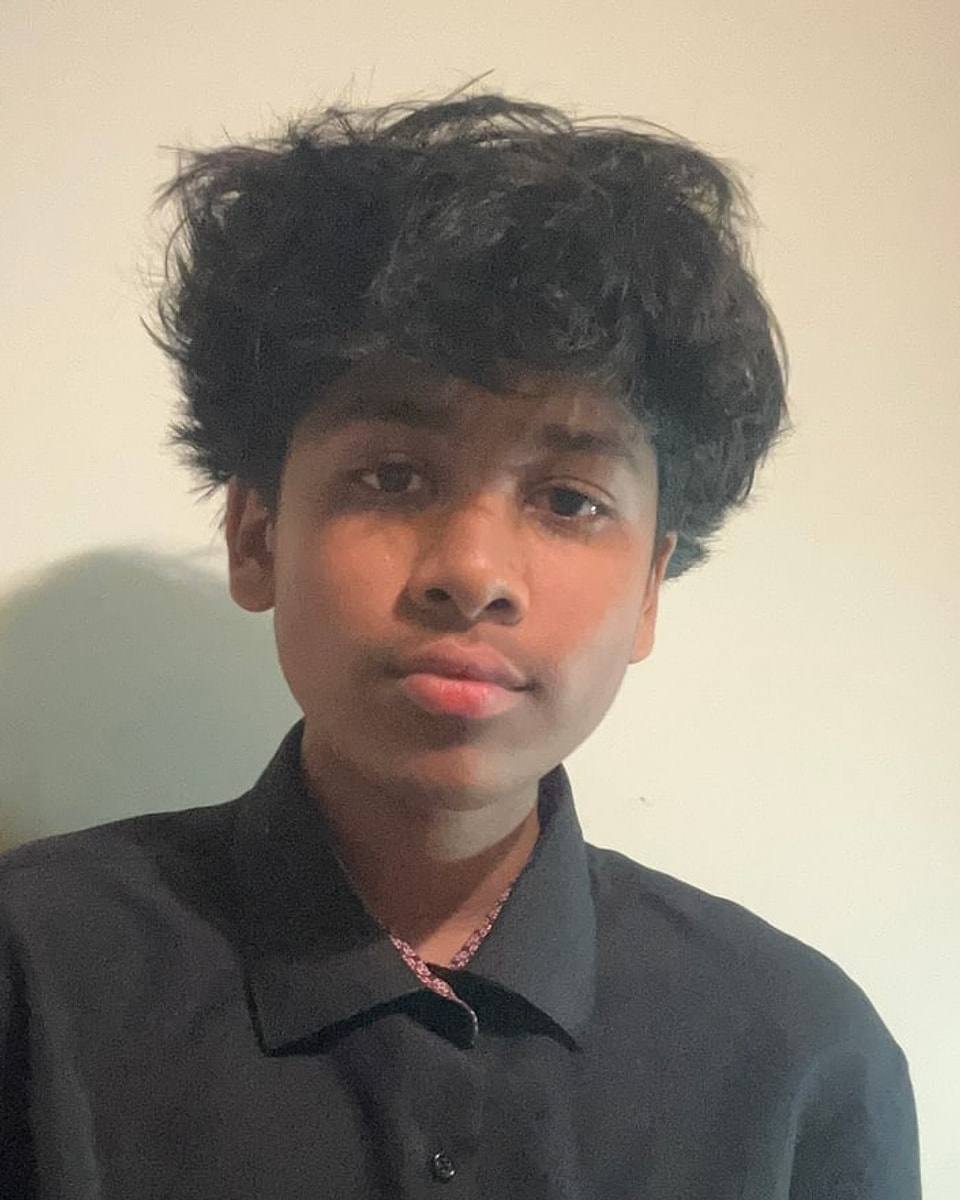
Nitish Pendyala
Student at South Brunswick High School and a member of his school's VEX Robotics team. Plays volleyball and likes hiking and camping.
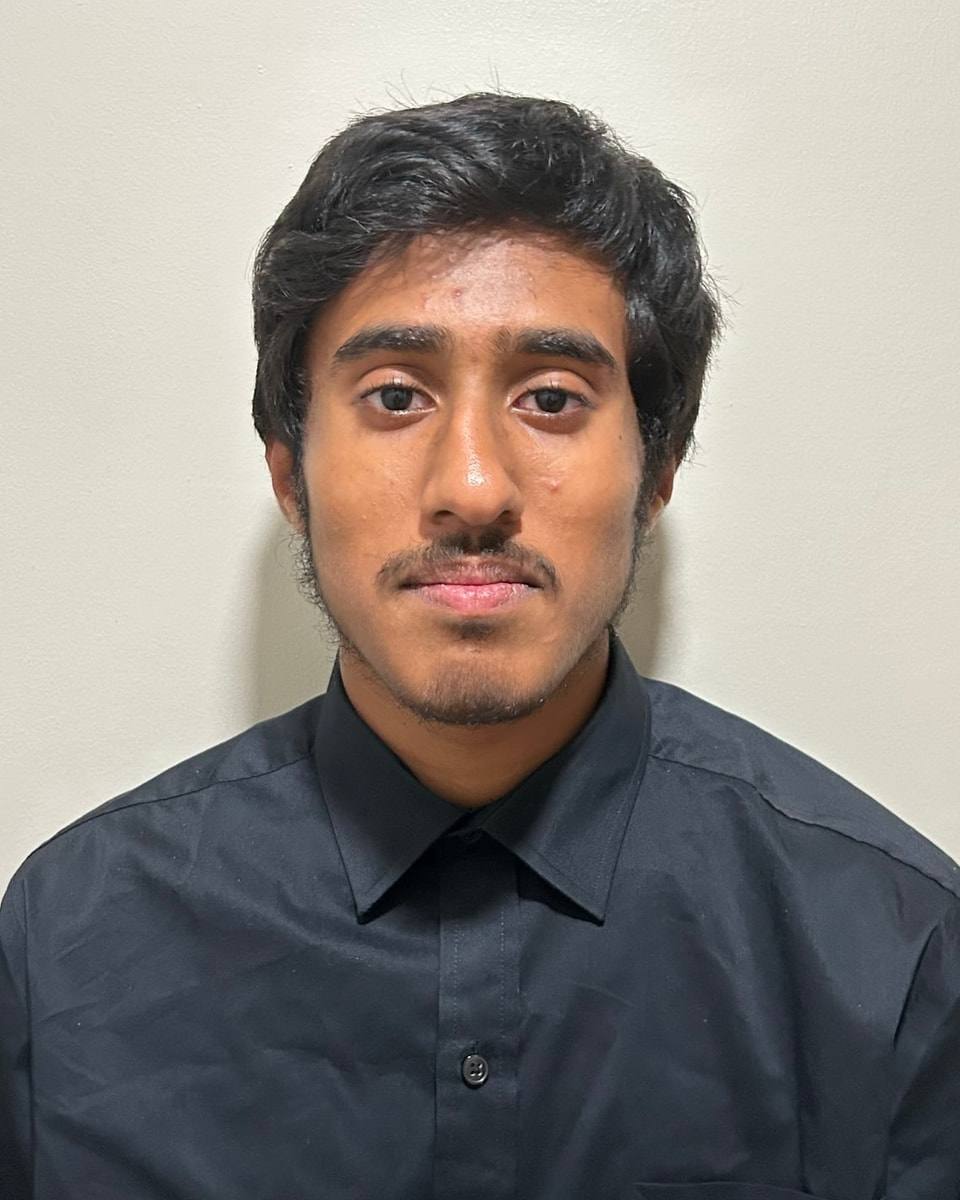
Rohan Kunala
Student at South Brunswick High School, active in STEM clubs and innovation research competitions. Likes traveling and camping with family and friends.
How RoboZone is organized
Fiscal sponsorship
RoboZone is fiscally sponsored by Hack Club, a 501(c)(3) nonprofit. RoboZone doesn't hold its own nonprofit registration; donations go through HCB, Hack Club's platform for the projects it sponsors.
This sponsorship covers RoboZone itself. If RoboZone grows into other communities, it wouldn't automatically extend to partner organizations or future branches.